

Character Homes
Renovating a Bathroom in a Queenslander: Timber Floors, Layouts and Council Rules
Bathroom Renovation Brisbane·Updated November 2026·7 min read
A bathroom in a Queenslander can be renovated to a modern standard, but the timber floor has to be checked, repaired and stiffened before new waterproofing and tiles go down, or the tiles crack and the membrane fails. Internal bathroom work usually doesn't need council approval, though external changes to a house in Brisbane's Traditional building character overlay can. Here's what to plan for.
Why are timber floors the big issue?
Queenslanders are built on stumps with timber floors that move with temperature and humidity. Tiles and waterproofing membranes don't like movement. If the floor bounces or flexes, grout cracks, tiles go drummy and the membrane underneath can split.
A good renovator checks the joists and bearers under the bathroom, repairs any rot from old leaks, adds noggins or extra joists if the floor flexes, and lays a suitable sheet flooring before waterproofing. Ask how they plan to do this, and expect it as a separate line in the quote.
How is a bathroom waterproofed on timber?
The waterproofing still has to meet AS 3740, the Australian Standard for domestic wet areas. On timber, the membrane system and the detailing at corners and junctions matter more, because that's where movement concentrates. Bond breakers and flexible sealant at wall-floor junctions let the membrane move without tearing.
Ask for photos of the membrane before tiling and a waterproofing certificate at the end. If there's a room or a carport under the bathroom, a leak will show there, so it's worth getting right.
Should the bathroom go upstairs or downstairs?
Many raised Queenslanders now have living space built in underneath, and a second bathroom downstairs is common. A downstairs bathroom on a slab is easier to waterproof and tile, but drainage falls, ceiling height and the connection to the sewer decide whether it works. If the underneath was built in without approval, sort that out before adding a wet area.
Renovating the original upstairs bathroom keeps the traditional layout and is often where the main bathroom belongs, near the bedrooms.
Do I need council approval?
For most internal work, no. Brisbane City Council's Traditional building character overlay covers areas with intact groups of pre-1947 houses, and it focuses on the look of the house from the street. Council generally requires a planning application for external extensions to houses in the overlay, and some renovations to houses built in or before 1946 that involve demolition can need assessment.
So a bathroom renovation inside the existing walls is usually fine, but adding a window to the street side, extending the house for a new ensuite or changing the roof may need approval. Check with Council before you design those.
What finishes suit a Queenslander?
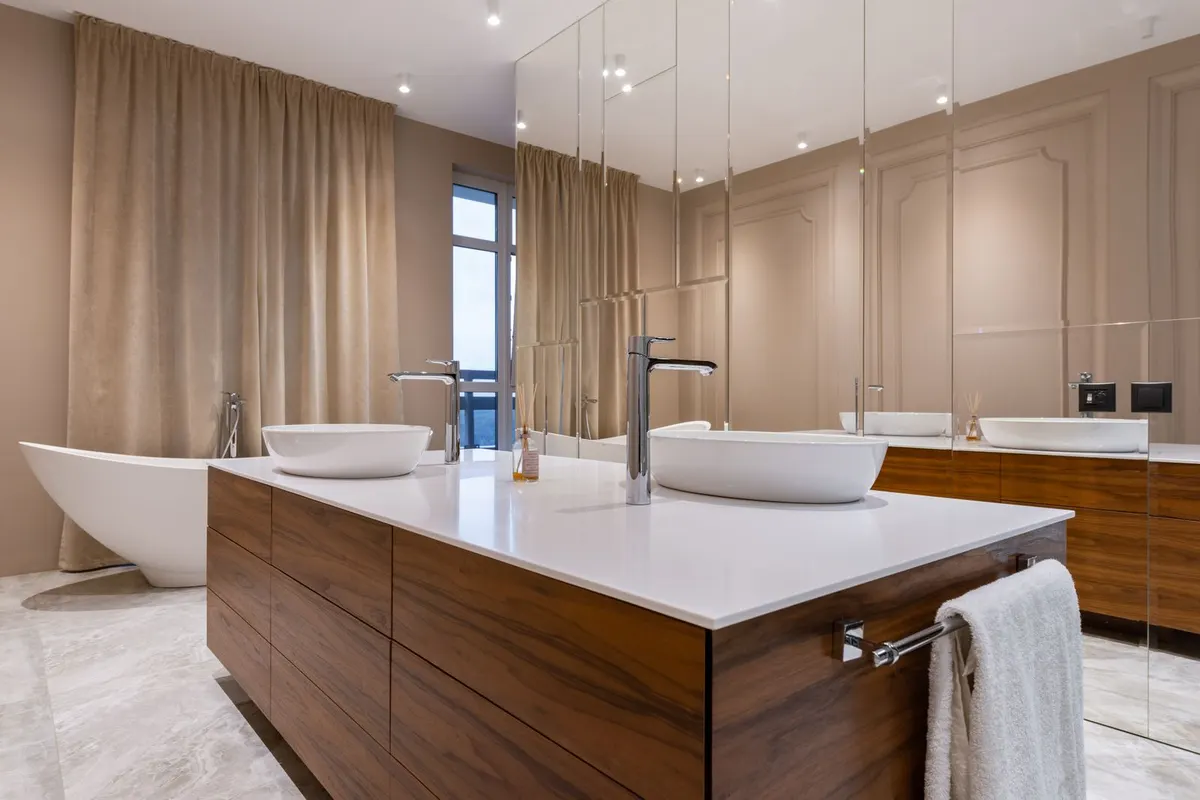
Details that echo the house work well: VJ-style wall panelling above tiled areas, a timber vanity, subway or encaustic-look tiles, a freestanding bath and traditional-style tapware. Behind them, everything is built to today's standards: new waterproofing, plumbing and a properly vented exhaust fan.
What does it cost?
Published Brisbane figures put a mid-range bathroom renovation at $20,000 to $35,000, about $27,000 typical, and premium at $35,000 to $55,000. Floor repairs, stiffening and access on steep blocks add to that. A renovator who has seen the floor from underneath will give you a more accurate price.
What you get for the price
The standard we ask of every renovator we refer you to
The renovator does the work, not us. Ask for each of these in your written quote and contract.
- A renovator with a current QBCC licence for the work, and public liability insurance (certificate on request)
- Waterproofing to AS 3740 by a licensed waterproofer, with a certificate you keep
- Plumbing by a licensed plumber and electrical work by a licensed electrician
- A written, itemised quote: demolition, waterproofing, tiling, fixtures and labour listed
- A written contract for any job over $3,300, with no more than the legal maximum deposit (10% up to $19,999, 5% from $20,000)
- Queensland Home Warranty Scheme cover arranged by the renovator on jobs over $3,300
- Photos of the waterproofing before it is tiled over, and a walk-through at handover
Photos of the waterproofing, and a written scope
Waterproofing is hidden under the tiles once the job is done. You get photos of the membrane before tiling and the waterproofing certificate, plus a written scope before anything starts.
Licensed, insured renovator, public liability certificate on request
Questions people ask
Sources
Related services
Published 17 November 2026.